
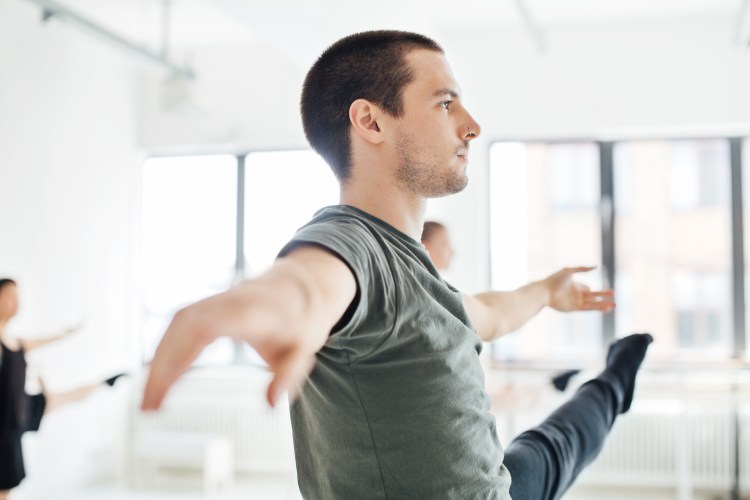
Mobility is one of the key issues facing our aging population, and one of the most important factors in moving with ease is balance.
Researchers have found that life-long ballet training can lead to better clinically relevant balancing abilities as well as to vestibular-dependent spatial orientation capabilities. The vestibular system allows us to detect the position and movement of our head in space. This makes possible the coordination of eye movements, posture, and balance.
So how does ballet improve balance?
Core strength is at the heart of balance, and ballet is a way to achieve it. Posture control, leg lifts, turns, back movements and floor work are all great for improving core strength.
Further benefits gained by studying and practising ballet movement are improved strength, co-ordination, posture, as well as overall structural integration (different parts of the body working together for the common goal), neuromuscular connection (communication between the muscles and the brain), and increased ability to focus. Ballet may also help prevent injury and reduce the risk of dementia. Researchers at the Albert Einstein College of Medicine looked at the effects of 11 different types of physical activity but found that only one of the activities studied, namely dance, lowered participants’ risk of dementia. Ballet can also reduce the onset of osteoporosis and keep bones healthy, and it has been found to aid those with Parkinson’s Disease.
Whether at the barre or in the centre, ballet exercises require balance. Every time we use our balance, we improve it. We do this by strengthening the muscles required to balance and to hold our positions. And so use it, or lose it!

 balletespressivo.com
Ballet never ceases to astound and amaze me… it really is like a near cure-all and the best medicine, treatment, and prevention for so many afflictions! From uplifting the mind, body, and soul… there isn’t one thing that Ballet touches that it doesn’t turn to gold. – Vieve Paisley
LikeLike